
Frozen pricing
A single monthly or quarterly average tariff negotiated at signing. When wholesale prices swing, the host or the CPO loses — depending on which way.
On every session, the applied purchase rate is the one of the moment — not a rough monthly average. Compatible with variable-rate supply contracts, the de-facto standard on new signings since 2025.
New electricity supply contracts signed since 2025 are almost systematically variable-rate — EPEX-linked, time-bracketed, or a mix. Reimbursing the host on a monthly average is now a losing game, for one of the two parties, every single time.
A single monthly or quarterly average tariff negotiated at signing. When wholesale prices swing, the host or the CPO loses — depending on which way.
The CPO exports sessions, re-enters energy prices into Excel, applies weighted averages. 1 to 2 days a month, plus errors.
The host disputes, the CPO recomputes, things drag. With 200 hosts, it's mechanically unsustainable.
Four simple principles that turn energy reimbursement from an admin chore into a native CPMS calculation.
On every session start, Chargekeeper fetches the applicable purchase price at that exact moment, indexed against the host's supply contract. Reimbursement is computed live, not after the fact.
Standard on supply contracts signed with EDF, TotalEnergies, Engie, Eni and peers since 2025. Hourly indexing, spot pricing, prices changing every hour — it doesn't matter: the calculation runs per session.
Energy consumed comes from the Charge Detail Record produced by the charger — raw, non-negotiable data. No estimation, no favourable or unfavourable rounding.
Each line of the monthly credit lists the session, duration, kWh delivered, applied tariff and formula. The host can trace everything without calling support.
Define the supplier, indexing mode (fixed, time-of-use, formula), reimbursement margin, periodicity. Once configured, the computation runs session by session — no intervention needed.
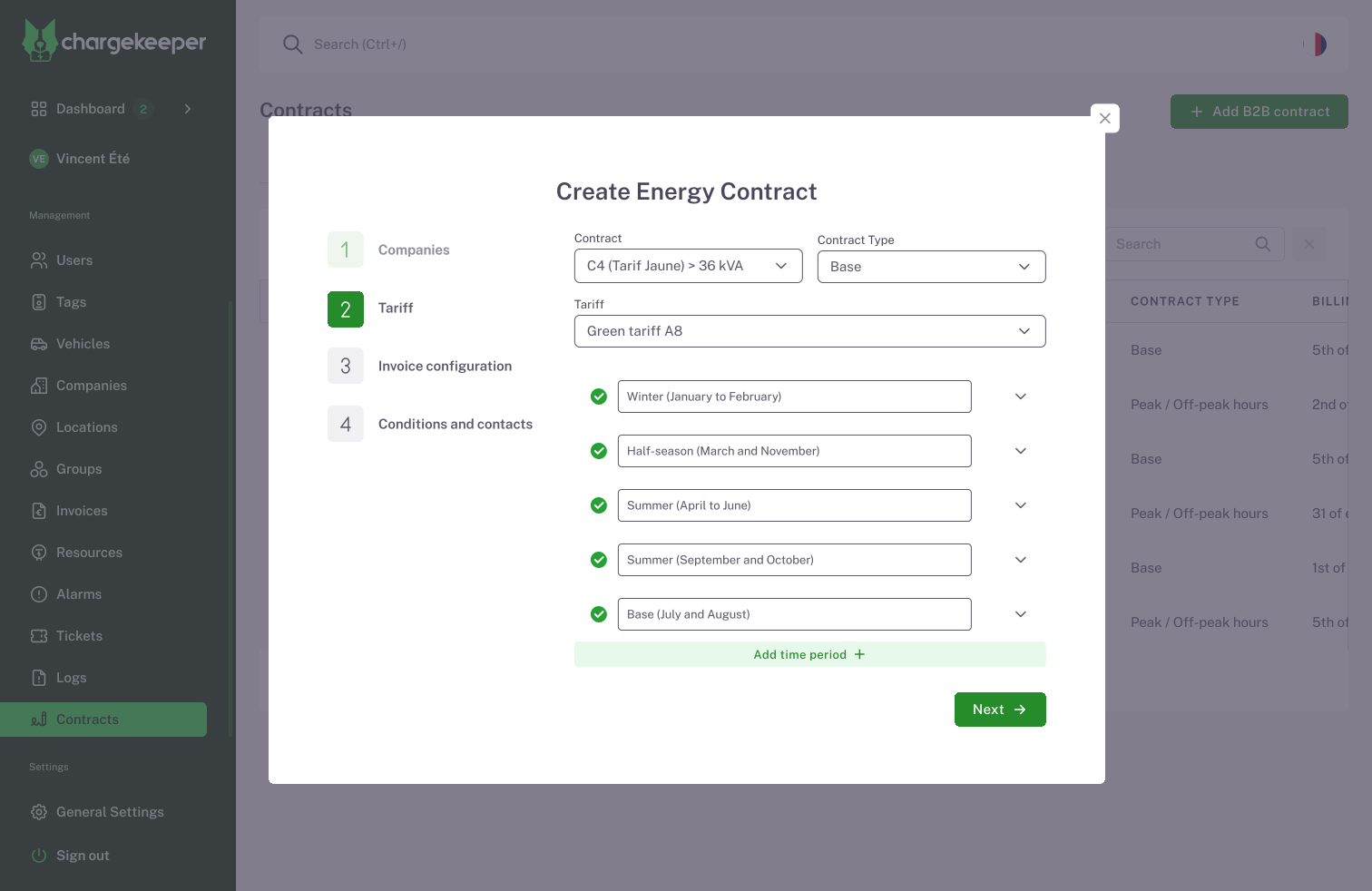
On the host record, the CPO sets the indexing mode: fixed tariff per time bracket, hourly spot tariff, EPEX-linked formula or in-house index.
According to negotiated terms: full pass-through of the purchase price, with a fixed per-kWh margin, or a % margin. Combinable per site, per bracket.
Each CDR triggers the calculation. The reimbursement journal is consultable in real time, line by line, as soon as a session ends.
On the contract date, the consolidated credit is generated. Exportable as PDF + XLS detail + ISO 20022 transfer ready to upload to the bank.
You host chargers operated by a third-party CPO — and you want to be reimbursed at the fair real price, without renegotiating an addendum every time the energy contract renews.
You operate chargers for hosts with variable-rate energy contracts — and you want to stop computing manually each month.
You have PV or collective self-consumption on site — marginal energy cost changes by the hour and by production. Indexable.
Transparent reimbursement at the fair price is what brings a host partner back for a second and a third site.
No more rough averages favouring one party over the other.
Lines are visible the day after the session, not at month-end.
When the supply contract changes, update the indexing — not the CPO–host contract.
Each credit line is justified by a precise session, a dated tariff, a visible formula.
It's the new standard since 2025. Let's discuss your current model — we'll tell you what to adapt.
Book a demo